
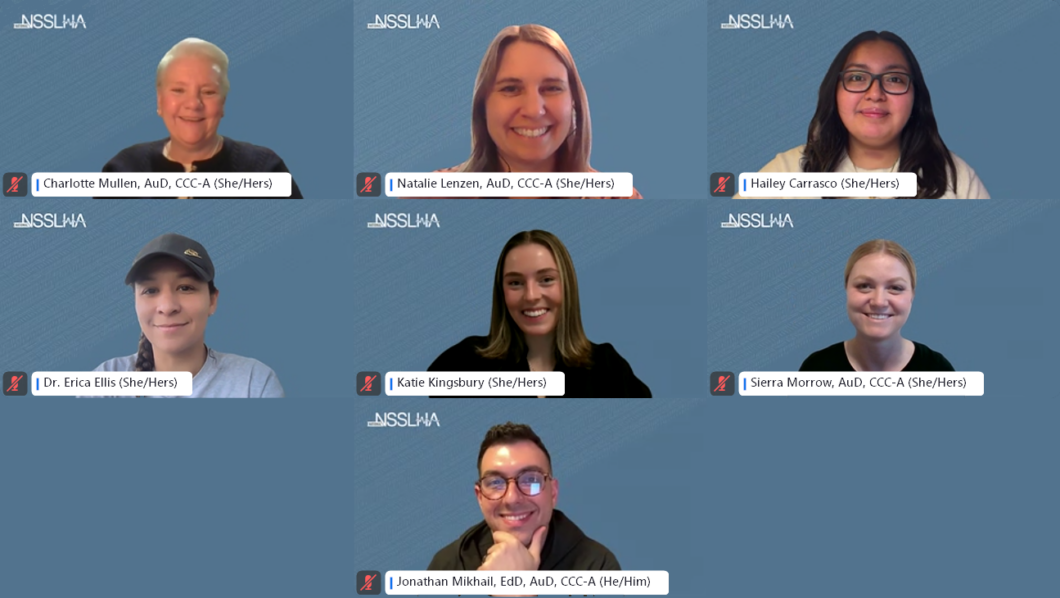
It’s natural to have a lot of questions when it comes to audiology externships — where to apply, how to stand out, and what to expect once they start. During National NSSLHA’s Office Hours event about audiology externships, panelists shared practical advice to help students feel more prepared for this important step in their training.
Here are the top takeaways.
Watch the full event:
1. Researching Externships
Start researching externship opportunities earlier than you might expect. Many sites interview students in the fall for placements that start the following year. Some externships also require formal agreements between universities and clinical sites, and those can take time to finalize.
Panelists shared that sometimes placements fall through for reasons outside of a student’s control. For example, legal agreements between organizations may take longer than expected, or unexpected changes can happen at a clinic. While this can be stressful, it’s not very common, and most students are able to find another placement with help from their program.
If this happens, reach out to your program director or externship coordinator right away. They have experience helping students navigate these situations.
You can also search for opportunities using the ASHA Career Portal and the Audiology Clinical Education Network. Some sites post openings there if they still have externship spots available.
When researching sites, think about more than just the location. Consider the types of patients you’ll work with, the pace of the clinic, the supervision style, and what you hope to learn. Talking with current or former externs can also give you a better sense of what the experience is like.
2. Crafting Your Resume
Your resume should show the experiences that have helped prepare you for clinical learning — even if you’re still early in your program.
Panelists noted that students sometimes underestimate their experiences. Coursework, clinical simulations, screenings, research, and early rotations all help show your skills and interest in the field.
Before submitting applications, ask several people to review your resume. Writing centers, career services, faculty mentors, and externship coordinators can all help you improve it.
Taking the time to revise your resume can make a big difference during the application process.
3. Cover Letters
Your cover letter doesn’t need to include a dramatic personal story. Instead, focus on clearly explaining why you’re interested in audiology and why you’re applying to that specific externship site.
You can talk about coursework, mentors, clinical experiences, or moments that confirmed your interest in the profession. The goal is to show that you’re motivated and excited to learn.
Like resumes, cover letters benefit from feedback. Many panelists recommended using university resources like writing centers or career services, and asking faculty members to review your letter before you submit it.
4. Stand Out During Interviews
Preparation matters — even for virtual interviews.
Panelists recommended paying attention to your setup for online interviews. Make sure your background is clean, lighting is good, and distractions are minimized. These details can help you make a strong impression.
Interviewers are often paying attention to how you think through questions and how you communicate — not just whether you give a perfect answer.
It’s also important to ask your own questions. You might ask about supervision style, expectations for externs, the clinic environment, and opportunities to gain independence.
You can also ask about stipends or compensation if that’s something you’re considering.
After the interview, sending a short thank-you email is a good idea. This can also be a great time to ask if you can connect with current externs to learn more about their experience at the site.
5. Adapting to Preceptor Styles and Clinical Environments
Every clinic and preceptor works a little differently, so being flexible and communicating openly can really help you to thrive during your externship.
Many sites start rotations by learning about your previous experiences, goals, and how you like to learn. Panelists encouraged students to share how they prefer to receive feedback and what skills they want to improve during the rotation.
Talking about expectations early can make the experience smoother. Some programs meet with students on their first day to go over schedules, goals, and how responsibilities will grow over time.
If you start to feel overwhelmed or are struggling with something, it’s important to speak up. Reach out to your preceptor, externship coordinator, or program director. They want to help you succeed and can support you as you learn.
Externships can also feel like a big adjustment. Many students go from a flexible graduate school schedule to working in a clinic full-time. Panelists suggested finding ways to protect your time outside of audiology and building routines that help you recharge.
If you’re placed with another extern, remember that it’s not a competition. Each student brings different experiences and strengths. Working together can help both of you learn more.
One message came through clearly from the panel: use this year to learn as much as you can. Observe different approaches, ask questions, and take advantage of opportunities that come your way.
Your externship isn’t just another requirement to complete — it’s a chance to grow your skills, explore the field, and discover what areas of audiology interest you most.