
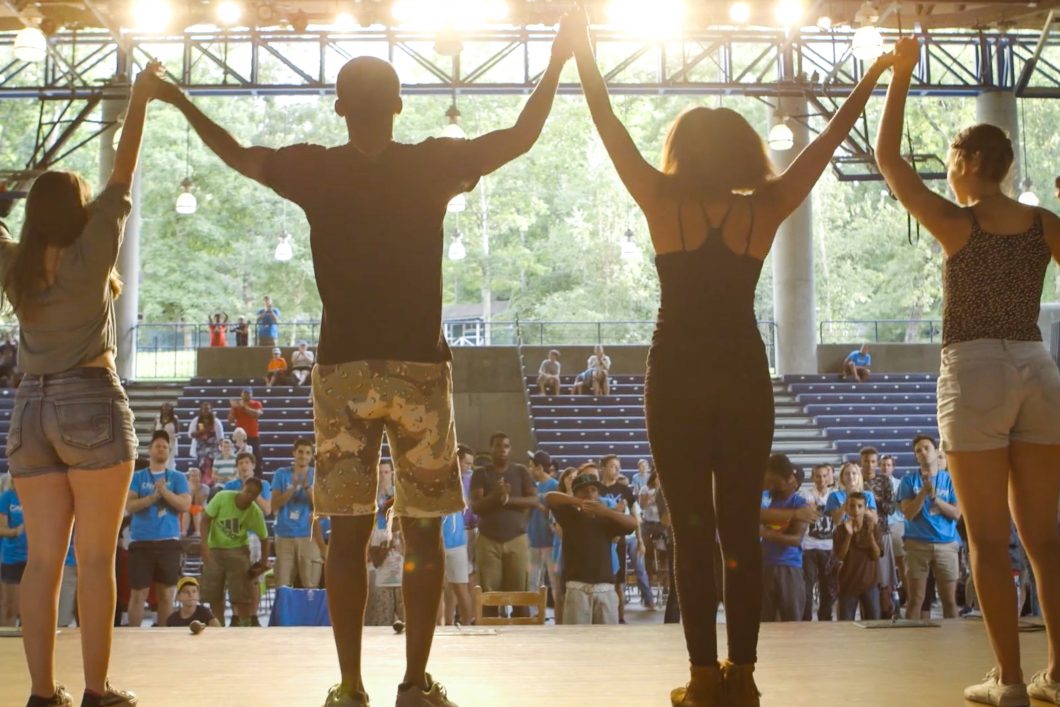
I’ve stuttered since I was 3. I always knew I didn’t speak like everyone else and always got frustrated with myself when I talked. I saw an SLP on and off throughout my elementary, middle, and high school years. There were times when my stutter became more pronounced, then I’d go to speech therapy and I’d become more fluent. Then I’d stop going to therapy and my stutter would become more pronounced again. It was a vicious cycle!
Now I’m an undergrad CSD student at the University of Washington (UW) … stutter and all.
Embracing My Stutter
You’re probably wondering why I decided to become an SLP. How could I become one if I’m still stuttering myself? What clinic would want to hire me? Would patients want to work with me? These were all questions I asked myself, too.
During my first year of community college, I felt lost and had an especially tough day of strangers asking me rude questions about my stutter. Once again, I found an SLP for help … and I saw her for the next 2 years.
During this time, I learned so much about my stutter. I finally accepted it, instead of trying to force fluency. I became empathetic and a passion grew to help others, like me, with communication disorders.
Stuttering Awareness
As the UW NSSLHA chapter’s historian, my primary goal has been to bring more awareness about stuttering to campus. When I saw a post about the My Beautiful Stutter documentary on Instagram, I jumped at the chance to organize an event to show the film. Along with my good friend and UW NSSLHA chapter treasurer, Ashlyn, we organized a watch party for all students at UW.

As someone who stutters, it meant a lot to show this film to my peers. At first, I felt extremely vulnerable. Stuttering was something I tried to hide as a kid out of embarrassed. Now, here I was, showing others a film about people who stutter—and all of the good and bad that stuttering entails. This film is a realistic depiction of what it’s like to have a stutter. It puts everything out there. It felt empowering to show others a side of me that I’d kept hidden for most of my life. Because the reality is, it’s nothing to be embarrassed about!
The reaction my peers had to the documentary was amazing. It was so accurate, insightful, and inspiring. One grad student, in particular, told me that the film really ignited an interest in her to pursue helping those who stutter.
Let’s just say … there were some happy tears after this viewing party!
My Beautiful Stutter—Opening Doors
Since hosting this event on campus, I’ve made so many new friends who stutter. It’s created a whole new community for me and opened doors to opportunities I never would have imagined!
After our showing of the film, I met David Sanchez—a graduate student at UW’s Speech and Hearing program, a person who stutters, and a camp leader at Camp SAY (the camp for kids and teens who stutter that’s highlighted in the documentary). He was organizing a screening at Seattle Children’s Hospital and wanted me to participate in a Q&A session following the showing. At first, I was nervous and not quite sure I wanted to do it … but I push through my fears and said yes!
I’m so glad I did. The panel was filled with people who stutter, ranging from 12-30 years old. The crowed asked us questions about the film and we shared our personal experiences. Everyone on the panel was incredibly insightful.
It was an opportunity that never would have come to me if I hadn’t opened up about my own stutter, got past my nerves to organize a showing of My Beautiful Stutter, and put myself out there. That’s just how inspiring this documentary is!
Host a Showing of My Beautiful Stutter on Your Campus
As a future SLP, I want to create even more opportunities for others with communication disorders to come together to share their stories. I believe there’s a lot of power in joining forces and having one collective voice.
If you’re interested in showing My Beautiful Stutter on your campus, please visit their official website www.mybeautifulstutter.com and click the “Host a Screening” button.
I highly recommend taking advantage of this amazing opportunity. You won’t regret it!
Merci beaucoup pour ce sujet
thank you so much
Great article . I will share this article with my colleagues. Keep updating.If you want to know about Speech Therapy For Stammering please visit us
The Ryerson Students’ Union (RSU) has yet to approve its annual operating budget
This was such a moving and honest piece. The way you describe moving from frustration to acceptance, and then turning that experience into advocacy, is incredibly powerful. I especially appreciated how the documentary helped create community and open up real conversations around stuttering. Stories like this remind us how important representation and empathy are. For anyone interested in creative, accessible ways to engage people of all ages, Photo to Coloring Page is also a fun tool worth checking out.
What a powerful and honest piece. I really appreciated how you connected your personal experience with stuttering to advocacy and community-building on campus. That kind of openness can make a real difference for students who feel isolated. The documentary sounds especially meaningful because it doesn’t just discuss stuttering—it helps people understand the lived experience behind it. If you’re interested in creative ways to support awareness campaigns or engagement around topics like this, AI House Music Maker could be a useful tool to explore: AI House Music Maker
What a moving and honest reflection on stuttering, self-acceptance, and the power of representation. I really appreciated how the post shows that a documentary can be more than a film—it can open doors, build community, and help others feel seen. The part about turning vulnerability into advocacy was especially powerful. If anyone wants to explore more creative, story-driven ideas online, they can also check out Deltarune Prophecy Maker for something a little different and imaginative.
This post is incredibly moving and honest. I appreciate how it shows stuttering not as something to hide, but as part of identity, growth, and connection. The way you turned vulnerability into advocacy is inspiring, especially through the campus screening and the Q&A with other people who stutter. It’s a powerful reminder that awareness and community can change lives. I’m curious how others exploring communication differences might relate to this experience, and I’d encourage them to check out 格ゲー認知診断 too.
This is such a thoughtful and powerful piece. I really appreciated how you framed My Beautiful Stutter as more than a documentary—it sounds like it became a catalyst for confidence, community, and advocacy. Your honesty about vulnerability and acceptance makes the message even stronger. If anyone wants to explore a creative, memorable perspective like this, they might also enjoy Witch Hat Atelier Spell Maker: Witch Hat Atelier Spell Maker
Powerful article. I really appreciated how honestly you described the shift from trying to “hide” stuttering to embracing it as part of your identity. That vulnerability can make such a big difference, especially for students and future clinicians. The way you connected the documentary to real awareness-building on campus was inspiring, and it sounds like the screening created a genuine community. For anyone interested in communication support, there are also helpful tools like AI Vocal Remover that make audio editing and voice separation much easier.
This post is incredibly moving and honest. I really appreciate how it highlights stuttering not as something to hide, but as part of identity, growth, and community. The story about turning vulnerability into advocacy is especially powerful. It also made me think about how different people can connect with the same idea in unexpected ways. For anyone who enjoys a bit of spontaneity or just wants a fun break, I’d also recommend checking out Random Pokémon Generator for something light and entertaining.
Ezier.AI helps creators unlock their imagination by combining advanced AI models with intuitive tools for producing high-quality digital content quickly and efficiently.https://ezier.ai/
Tell our AI your English goals—whether it’s travel, work, interviews, studying abroad, or daily life—and get personalized lessons designed just for you. Each lesson is tailored to your level and learning goals, helping you build practical skills and improve your English with confidence.
Enjoy your first 7 days of free learning: https://howtolearnenglishfast.com/
What a powerful and honest piece. I really appreciated how the article shows stuttering not as something to hide, but as part of identity, growth, and advocacy. The campus watch party and panel discussion sound especially meaningful because they turn vulnerability into community and awareness. Stories like this can have a real impact on how people understand communication differences. If you’re exploring creative ways to tell stories or spark attention around a message, the diss track generator might be worth checking out.
Tinly delivers the best of both worlds: the structure of a carefully designed language course and the flexibility of AI-powered personalization. Every lesson is created to match your goals, level, and learning journey. As you improve, your course evolves with you, helping you stay motivated and make steady progress.
Create your own personalized course for free during the first 7 days at: https://tinylesson.app/
This was a deeply moving read. What stood out to me most was how the screening turned vulnerability into connection, not just awareness. Stories like this remind us that every voice carries context, courage, and identity. For audio projects that explore speech, music, or personal storytelling, tools like AI Stem Splitter can also help isolate and better understand different layers of sound.
What stayed with me is the idea that fluency isn’t the only measure of a voice. Sometimes the pauses, repetitions, and effort carry part of the story too. This article shows why awareness matters: it helps people listen with more patience, not just expect smoother speech. For creative projects inspired by personal stories, an [AI Lyrics Generator](https://musicaura.ai/ai-lyrics-generator) can also help turn lived experiences into words that feel easier to share.
Our AI builds complete language courses with structured lessons, practical exercises, and real-life scenarios. With personalized content that adapts to your goals and progress, you can learn more efficiently and stay motivated throughout your journey.
Try it free for 7 days: https://littlelanguagelessons.ai/
Wow seeing your journey makes me think Ai Manga Colorizer helped me accept differences too
Inspired by your journey Audri. GPT Image 2 helped me visualize my stutter too
Great read and very helpful breakdown! Really appreciate the clear explanations. (79803)
🌟 What a profoundly moving and honest reflection, Audri. Your journey from hiding your stutter to using it as a source of connection and advocacy is truly inspiring. The way you turned vulnerability into a community-building event shows incredible strength. Just the false sun. 🗣️💙just the false sun
🗣️💬 This piece really captures what makes My Beautiful Stutter so powerful — it’s not just about fluency, it’s about being heard and seen for who you truly are. 🙌✨ Thank you for writing with such honesty and heart. It reminds me that our differences aren’t barriers — they’re part of our voice. 🎙️❤️ For more stories that explore identity and human connection, check out Choicer Voicer Studio — a space that celebrates meaningful voices and perspectives. 🎧📖
Choicer Voicer Studio
This post really touched me. 😢 It’s a reminder that the way we speak is only one part of who we are, and that there’s so much strength and beauty in embracing our unique voices. 💪 The documentary sounds like a wonderful step toward greater awareness and acceptance. 🌈 Thank you for writing this! 👏 For more personal reflections and meaningful conversations, check out choicer voicer. 🌟The Choicer Voicer
I spent some time exploring the interface, and it really stood out to me in a positive way. The design feels clean, modern, and informative without overwhelming the user with too much content. I also liked how smoothly I could move between different sections without losing track of where I was.
After spending a little time navigating through the interface, I was genuinely impressed by how well everything is organized. The layout provides enough information while still maintaining a clean and uncluttered appearance. Moving from one section to another feels natural and seamless.
I took some time to explore the interface, and it left a really good impression. The overall design feels thoughtfully planned, with a nice balance between visual simplicity and useful information. Navigation is also very smooth, making it easy to explore different sections without any confusion.
I spent a while looking through the interface, and I really appreciated how polished the experience feels. The layout is clean and easy to understand, while still providing plenty of useful information. Switching between sections is quick and intuitive, which makes the whole experience feel effortless.
After exploring the interface for some time, I found it to be very well designed. It manages to present information clearly without making the screen feel crowded or overwhelming. I especially liked how easy it was to move through the different sections and find what I was looking for.
I had the opportunity to spend some time with the interface, and it definitely made a strong impression. The design feels modern and balanced, with enough information to be useful without becoming visually overwhelming. The smooth transitions between sections also make the overall experience much more enjoyable.
I explored the interface for a bit and was impressed by how simple yet informative it feels. Every section seems to have a clear purpose, and the layout makes the content easy to follow. Navigation is also very smooth, so moving around the platform feels natural rather than complicated.
This documentary is such a powerful look at the journey of stuttering. I often use a helpful tool for editing my own advocacy videos called the free VEED AI background remover alternative
This documentary is such a powerful look at the human experience. It really highlights how we communicate, which makes me think of tools that help researchers create scientific content
This documentary is so moving. I often need to pull stills from videos for my projects, and I found a better way to extract frames than VLC. extract frames from vlc
This documentary is so moving. I often need to pull stills from videos for my projects, and I found a better way to extract frames than VLC.anomalouscoffeemachine3
This favorites lol documentary is such a powerful look at the journey of stuttering. I often use a helpful tool for editing my own advocacy videos called
This post beautifully captures how stuttering can shape identity, resilience, and purpose—especially for future SLPs like Audri. If you’re an adult navigating joint stiffness or arthritis that limits your daily comfort, you understand how a physical challenge can quietly affect your confidence and routines. At MagnetPure, we design magnetic copper bracelets with solid copper and neodymium magnets, crafted for everyday wear to support joint comfort and circulation. They’re a subtle, stylish addition for anyone over 40 seeking gentle relief, or a thoughtful wellness gift for someone managing similar aches. Just as Audri turned a personal struggle into a tool for connection and advocacy, our goal is to help you move through your day with a little more ease. Learn more about our wellness jewelry here: MagnetPure.
This is a clever trick for checking panel quality, especially if you’re buying used gear. I usually rely on a full black screen to spot any stuck pixels before committing. It’s quick, and works fine on my laptop’s display. Definitely worth keeping bookmarked for your next screen test.
This piece beautifully captures how shifting from shame to self-advocacy transforms not just one life but entire communities. I especially resonated with the way the documentary opened real dialogue—something that reminds me of the thoughtful, community-focused approach Aniimo takes with its creature ecosystems and team-building tools.
This piece beautifully captures how personal vulnerability—like organizing a documentary screening—can spark real connection and change. I especially related to the emphasis on lived experience over clinical perfection. For anyone exploring hands-on creative tools in communication or education, scrap mechanic offers surprisingly thoughtful sandbox mechanics for building interactive learning prototypes.
This article beautifully captures how personal storytelling—like organizing a documentary screening—can transform stigma into community. I especially related to the shift from hiding your stutter to leading conversations around it. For fans of immersive, story-driven experiences that challenge perception, The Freak Circus offers a similarly powerful journey into psychological depth.
This article beautifully captures how personal vulnerability—like organizing a documentary screening—can spark real community and understanding around stuttering. It reminded me that immersive, story-driven experiences help deepen empathy. For fans of narrative-based challenges, escape the backrooms offers similarly engaging, level-by-level exploration grounded in atmosphere and detail.
I found “My Beautiful Stutter-Not Just a Documentary to Me” while looking for more context, and it was worth the read. Merge PDF
This answered a few things I had been wondering about. Appreciate the clear explanation. fun interactive参考
This piece beautifully captures how shifting from shame to self-advocacy can transform both personal healing and community impact—especially through shared storytelling like *My Beautiful Stutter*. I’ve found Scarlet Skips helpful for reflecting on pacing and rhythm in communication, not just in games but in real-life expression.
This piece beautifully captures the shift from shame to advocacy—especially how the documentary helped build real community. As someone exploring communication tools, I found the emphasis on lived experience refreshing. For practical gear and update notes ahead of your next WARDOGS match, the independent guide there is handy.
I saved this for later. “My Beautiful Stutter-Not Just a Documentary to Me” has some points I want to revisit. https://littlebeartools.com
Accessible design principles apply to virtual spaces too, which is why I appreciate games that consider diverse player needs. The teamwork focus in dear passengers online reminds me of how thoughtful layouts reduce physical strain—both real and simulated. Good accessibility ultimately means more people can enjoy the experience together.
This article resonated deeply. Sharing stories like yours helps normalize stuttering for many readers. It’s inspiring how you embraced your journey while pursuing CSD studies. I enjoyed reading about the therapy cycle you described. Sometimes, when I need a break from heavy topics, I look for a space game to unwind briefly.
This personal account of living with a stutter resonated deeply. The cycle of therapy and regression described is so relatable. It’s inspiring to see how you embraced this part of your identity as an undergrad CSD student. For those needing avatars for presentations, I found the face square generator helpful.
I found “My Beautiful Stutter-Not Just a Documentary to Me” while looking for more context, and it was worth the read. Sleep Calculator
“My Beautiful Stutter-Not Just a Documentary to Me” was a useful read. I liked the practical tone and clear structure. 查看详情
This post is so inspiring—it’s incredible how sharing personal journeys like this can spark awareness and build supportive communities. For anyone interested in creative ways to express unique voices and stories, you might find HY Motion fascinating. It’s an AI tool that transforms written text into 3D motion, offering a new way to visualize and communicate experiences. If you’re exploring innovative platforms for self-expression or education, check out HY Motion for more details.
This documentary truly inspires empathy and understanding for those who stutter. If you’re interested in exploring innovative ways to express individuality and bring stories to life, I highly recommend checking out SAM 3D. Their platform lets you turn any photo into detailed, realistic 3D assets, which could be a powerful tool for visual storytelling and raising awareness.
Helpful perspective here. It gave me a couple of things to think about and try next. calculator calculate
Adding more water helps, but the mix gets weaker fast, so I like testing small batches before committing. On the design side, I sometimes turn a photo into a fun graphic with an Image to Sticker tool for labels or safety signs. Have you tried a plasticiser instead of extra water for tough pours?
I enjoyed reading “My Beautiful Stutter-Not Just a Documentary to Me”. The examples made the points easy to follow. Doctors Healthcare Plans
A practical tip for those preparing files for congress presentations: converting 3D models can be a hurdle, but converting directly in the browser keeps your data private. If you work with BIM or prototypes, a quick 3mf to stl workflow helps when preparing technical figures. Hope the rescheduling goes smoothly.
This was a thoughtful post. The details in “My Beautiful Stutter-Not Just a Documentary to Me” gave me a few ideas to try. https://virtualserversvps.com
“My Beautiful Stutter-Not Just a Documentary to Me” was a useful read. I liked the practical tone and clear structure. Villain Name Generator
Adjusting to life back in the States always comes with those little daily rituals that ground you again. For me, it’s been a fun mental reset with this daily 12-Letter Word Puzzle, even if the answer is a bit on the nose. Definitely helps shake off the jet lag brain.
That cycle of going to therapy when speech blocks flare up, hitting temporary fluency, and then falling back into frustration is such an honest reflection of how non-linear it really is. *My Beautiful Stutter* did such an important job showing that giving someone the space to speak at their own pace matters so much more than forcing fluent speech.
I edit short-form advocacy videos, and whenever I need quiet, reflective b-roll to hold on during a speaker’s natural pauses, the Kling 4.0 tool I use has been handy for rendering subtle listening shots. Starting with an image prompt of someone with relaxed posture usually keeps the motion grounded, and while it still misses on small eye micro-movements sometimes, having those quiet pauses visually lets a voice breathe without cutting away too quickly.
What a powerful reminder that storytelling can change how we see ourselves and each other. As someone who works with AI tools, I often think about how technology can support—not replace—human expression. That’s why platforms like Claude Imagine stand out: they give people a way to visualize ideas and emotions, whether through text-to-image or image-to-image creation, even inside Claude via MCP. It’s not about perfection; it’s about opening doors to new forms of communication and community, much like Audri’s experience with the documentary.
I enjoyed reading “My Beautiful Stutter-Not Just a Documentary to Me”. The examples made the points easy to follow. https://photostophotos.net
What a powerful reminder that the stories we hide can become our greatest source of connection. As someone who works with academic writers, I often see students quietly wrestling with anxiety over how their work will be judged—similar to that fear of being seen. Tools like SubmitSense help ease that worry by giving a clear picture before submission, much like sharing your own truth can open unexpected doors. This post really resonated; it’s inspiring to see vulnerability turn into advocacy and community.
Bonfire Night in London sounds like a great excuse to practice reacting to sudden flashes and bangs. If you enjoy sharp timing, I sometimes Play okiaimx online to train peek timing and first-shot aim. Perfect for staying sharp between fireworks.
Your point about I’ve stuttered since I was 🤝 3 was easy to 💫 follow, and it made me think of kingdomofmarionettes net. I’d enjoy reading a follow-up. I’d like 🙏 to learn a little 💡 more about it. Kingdom of Marionettes
This piece beautifully captures how personal vulnerability—like organizing a documentary screening—can spark real connection and change. I’ve found similar power in word-based reflection tools; Word Tiles offers a quiet, thoughtful space to engage with language in a low-pressure way.
Reading Audri’s story about embracing her stutter really resonated with me, especially how vulnerable it feels to share a part of yourself you once tried to hide. That same honesty is what makes great content connect with people. While her journey is about speech, it reminded me how important it is to give every voice a platform. If you’re creating video content and want to reach more viewers, tools that turn long videos into shareable clips can help. I’ve been using one that exports in 9:16 with captions, no watermark, which makes clips feel native to TikTok, YouTube Shorts, and Reels. A free account gives you three clips without a card, so it’s easy to try. Sometimes the smallest format change helps your story travel further.
This piece beautifully captures how personal vulnerability—like organizing a stutter documentary screening—can spark real connection and change. I’ve seen similar impact with creative tools that support expression, and Sally Face offers another thoughtful example for engaging with complex emotional themes through interactive storytelling.
Helpful perspective here. It gave me a couple of things to think about and try next. 点击这里
This piece really resonates—turning something personal into a way to connect with others is powerful. It reminds me how creativity can help people celebrate what makes them unique. I recently came across an AI rap video generator that lets you turn two portraits into a personalized duet, complete with custom scenes and original English rap. It’s a fun, unexpected way to mark birthdays, anniversaries, or friendships. Whether you’re honoring a personal milestone or just making someone smile, tools like this can add a fresh, joyful twist to storytelling.
Avoiding new debt during COVID is hard when old habits pull you back. One small trick that helped me: highlight only the key numbers in my budget notes with a bold text generator, so due dates and amounts stand out instead of blending into the wall of text.
Helpful perspective here. It gave me a couple of things to think about and try next. Cat Age Calculator
As someone who appreciates how technology can help connect and empower communities, I wanted to share a resource for those interested in games and tech: the AI Browser Games directory. It features a curated list of browser-based games, including AI-powered browser games
, and offers helpful guides and context for each title. If you’re looking for accessible gaming experiences or want to see how AI is shaping browser games, it’s definitely worth checking out!
AI-powered browser games
As someone who loves empowering creativity and communication, I was really moved by Audri’s journey and the community built around stuttering awareness. If you’re interested in expressing your story visually or want to create meaningful graphics for advocacy, I highly recommend checking out Recraft AI. It’s an advanced image and vector generator built for creators and communicators – perfect for turning ideas into stunning visuals that amplify your message.
Accepting the stutter instead of forcing fluency is the turn everything else hangs on — it’s what converts a personal question (“can I be an SLP if I stutter?”) into empathy for future clients. Organising the UW screening, then sitting on that Seattle Children’s panel for Camp SAY kids, is the answer in action. Thanks from fnf
The cycle of becoming more fluent in therapy, stopping, and then struggling again felt very honest. I also appreciated the reminder that stuttering is part of a person’s experience, not simply something to fix.
This week I had to submit a signed consent form. I photographed it with my phone and used this free in-browser document scanner to turn it into a clean printable PDF. The files stayed on my device, and the processing happened locally in my browser.
The detail about accepting the stutter instead of forcing fluency seems like the real turning point, and it reframes what a campus screening can do—not fix anyone, but make the topic normal enough to talk about. For anyone planning a showing, pairing the film with a short Q&A or discussion might give quieter students a low-pressure way to participate, especially if written questions are collected too.
The 10-string guitar detail is fascinating, especially how those extra bass strings change the instrument’s resonance. Off-topic, but I’ve been reading about optimizing Windows audio setups, and came across Radiant Optimizer for tuning system performance. Curious whether it helps DAW latency. Anyone here tried it alongside recording?