

For male-identifying students, their first day in a communication sciences and disorders (CSD) program may feel different. Men make up only 4.1% of undergraduate CSD students, 3.7% of speech-language pathology master’s students, and 8.9% of audiology doctoral students, according to the ASHA CSD Education Survey.
Despite these low numbers, male-identifying students bring unique perspectives to their programs—ranging from diverse communication styles to enhanced patient comfort for male-identifying clients. These qualities enrich their peers’ learning experiences and clinical practices.
In preparation for writing this blog post, I interviewed two male-identifying students at different stages of their CSD journey: (1) an early undergraduate student and (2) an audiology doctoral student. I also offer a third perspective: My own. I’m a senior at Maryville University, and I’m pursuing an undergraduate CSD degree. All three stories highlight challenges, support systems, and strategies for building relationships in a field that is largely female.
The Journey Begins: Perspectives From a First-Year Male-Identifying Student

Maryville University
For many students, the first CSD class marks the beginning of a career dedicated to supporting individuals with speech, language, and hearing needs. For male-identifying students, it can also bring initial surprises—like being the only man in the room. Cameron, a first-year student, described his first day as intimidating, but he quickly found his footing: He now describes himself as comfortable learning and collaborating, no matter who’s in the room! He also focuses on the positives, like honing his communication skills.
When asked about his biggest surprise in the field, Cameron noted the shocking statistic that only 3.6% of speech-language pathologists are male-identifying. His awareness of this gender disparity reflects the need for greater gender representation in CSD—and Cameron himself is the definition of such representation. Cameron’s resilience and positive outlook can inspire other first-year students who are facing similar challenges.
The “In-Between” Years: Insights From an Upper-Level Undergraduate Student

Maryville University
As a senior, I’ve had time to reflect on my experiences as a male-identifying student in a female-majority field. At times, I’ve struggled with imposter syndrome, feeling lost as the only male-identifying student. Occasionally, I feel a sense of inadequacy—like I don’t belong in this major due to the limited visibility of other male-identifying students in my day-to-day experiences. However, by seeking and being willing to receive support from peers and faculty, I’ve found my place in the program.
Being a male-identifying CSD student may be rare, but it’s incredibly rewarding at the same time. I remember my first-year orientation, where upper-level students marveled at having “a guy in the program”! Fast forward to today, where my fellow students and I have built—and continue to nurture—a collegial, comfortable, and trusting professional relationship. I’ve found passion in advocating for gender diversity in CSD. My cohort has been instrumental in building a solid sense of belonging, affirming my presence, and valuing my unique input.
Finding a sense of community within my cohort has helped me decrease the imposter syndrome–driven thoughts and feelings and has driven me to make a lasting change within this program. One of the ways that I did this was by actively participating in our local NSSLHA chapter (find yours on the NSSLHA webpage!) and interacting with my peers in class. My cohort now is one of the main reasons why I feel so supported and why I truly feel seen as a male-identifying CSD student. My cohort colleagues affirm my being in the program and look to me for my unique input. I am genuinely grateful for my cohort. And I know that we, as future CSD clinicians and researchers, will all contribute to making a positive difference in people’s lives in lasting, meaningful ways.
Advancing the Path: Reflections From a Graduate Student
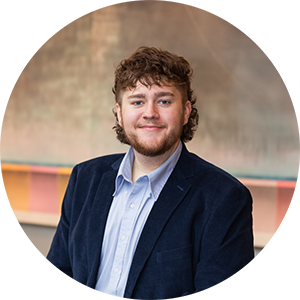
University of Texas at Austin
Graduate school marks a significant step for many undergraduate CSD students. By this point, a male-identifying student will have spent several years navigating being a male in a field made up of mostly females. To gain insights, I spoke with Ged Pearson, an audiology doctoral student.
Ged shared with me that his gender definitely has influenced his personal experiences—including the pressure he often feels, as one of the few male-identifying students, to (a) excel academically and (b) get more involved than he perhaps would have (had the field been more gender identity balanced).However, Ged also expressed gratitude for the camaraderie that he feels with other male-identifying peers in the graduate program: That shared bond has alleviated much of the pressure that he felt as an undergraduate.
As one of few male-identifying students in his program, Ged found mentorship to be both grounding and inspiring—helping him navigate his experience and motivating him to take on greater roles within the CSD community.
When reflecting on his most rewarding experience in CSD, Ged spoke passionately about serving on the National NSSLHA Executive Council. His dedication to representing male-identifying students and advocating for gender diversity in the field is impressive. As a fellow male-identifying student, I deeply admire Ged’s success and commitment to making a difference.
Three Main Takeaways and Tips
I conclude by offering three main takeaways and “tips” for how to foster an inclusive environment for male-identifying CSD students:
1. Build Awareness and Inclusivity in CSD Programs
Allow for an open dialogue for discussing gender disparities in the field. Doing so promotes awareness and creates a welcoming, understanding environment for male-identifying students. Faculty members can use this dialogue to highlight how diverse populations can enrich the learning experience and clinical practices.
2. Establish and Utilize Mentorship Programs
Create mentorship programs that pair students with mentors—whether it be faculty or more experienced students—who can understand the initial and ongoing challenges that male-identifying students face. ASHA’s Men’s Constituency Caucus (MCC) offers mentoring to male-identifying students who are eager to network and build relationships in their field.
3. Promote Community Building
Encourage participation in student organizations, such as National NSSLHA, that can help foster a sense of community among all students, especially those in underrepresented populations.
The personal stories highlighted here show the importance of supporting male-identifying students in CSD programs. By building relationships, we can set future clinicians up for success—and, in the process, encourage even more male-identifying students to join this rewarding field.