
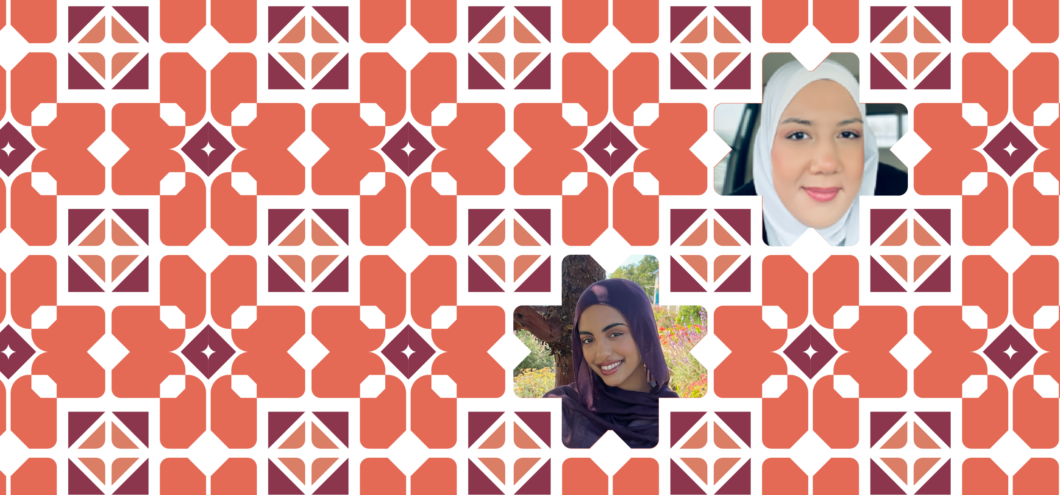
Arab American Heritage Month takes place in April and celebrates the contributions and experiences of Arab Americans. This month, we’re highlighting Arab American CSD students Sumaya Albadani, Hadeel Shoaib, and Leila Mozeb. They share their backgrounds, advice for future students, ways programs can offer support, and their hopes for representation in speech-language pathology and audiology.

Sumaya Albadani
CSU Sacramento

Hadeel Shoaib
Wayne State University
Leila Mozeb
CSU Sacramento
1. Can you share a bit about your background and what inspired you to pursue a career in speech-language pathology or audiology?
Sumaya Albadani
CSU Sacramento
I am a first-generation Yemeni-American student attending SacState and will graduate with my bachelor’s degree in Spring of 2026. My mom works with people with disabilities and inspired me to look into speech-language pathology as a career path when I was in high school. I fell in love with the field, and have been passionate about it ever since!
Hadeel Shoaib
Wayne State University
I am Egyptian-American and found out about speech-language pathology when I started working in an ABA clinic, where I saw many children who needed more support with communication than they were receiving. Being in that environment made me realize how important speech therapy is and how much of a difference it can make in a child’s life. Around the same time, I learned more about my own ADHD, which helped me understand myself and pushed me to want to help kids who struggle in similar ways. I also noticed there were very few people in this field who shared my cultural background, and that made me feel like my presence here truly matters.
Leila Mozeb
CSU Sacramento
I am Arab American. My parents are from Yemen, but I was born and raised in America. I grew up around my extended family, which helped immerse me in Arab and Yemeni culture, so I don’t really feel left out despite being raised in America. I chose to pursue a career in this field because I received speech services when I was younger. It was the best part of my day, and I never wanted to leave. I want to replicate that feeling for others, especially those in my cultural community. Speech and language services are sometimes not talked about enough in Arab culture. While there is a rise in awareness these days, I would like to help get rid of the negative perspective that lots of people still have towards these services.
2. What advice would you give to future Arab American students considering CSD graduate programs?
Sumaya Albadani
CSU Sacramento
Stay true to yourself, study hard and make friends! It can be intense, but my close bonds with friends and professors made it all worth it.
Hadeel Shoaib
Wayne State University
I would tell Arab American students not to forget why they started and who they hope to help. There may be moments where you feel out of place, but your identity and experiences are needed in this field. Don’t be afraid to take up space and advocate for yourself. Even when it feels hard, keep going because our communities need people who understand them.
Leila Mozeb
CSU Sacramento
To future Arab American students, I encourage you to break free from the cultural norms! For some people, cultural and family influences may feel limiting and restrictive, but it doesn’t have to be. It’s okay to feel like the “odd one out” if it presents you with more opportunities to learn and grow. Don’t be scared of norms that shouldn’t apply anymore. Just because you have responsibilities at home doesn’t mean you can’t pursue your goals.
3. How can faculty, peers, or programs better support Arab American students in the field?
Sumaya Albadani
CSU Sacramento
In order to better support Arab American students, we need to keep an open mind that although the culture is different, the end goal is the same. Education and accessibility are the priority.
Hadeel Shoaib
Wayne State University
Support starts with listening and being open to learning about different cultures. Faculty and programs can help by being mindful of cultural differences and making students feel respected and included. Peers can support one another by approaching differences with curiosity and empathy instead of assumptions. Feeling understood can make a huge difference in a student’s confidence and success.
Leila Mozeb
CSU Sacramento
Faculty and peers are generally very welcoming to Arab American students in the field. Our faculty has worked with a wide array of cultures and backgrounds, so they’re no stranger to the adversities we sometimes face. I highly recommend talking to a professor when you feel lost or feel like your background or culture is limiting you from what you want to do. Overall, the faculty supports us pretty well, but it would help if our holidays and cultural/religious responsibilities and celebrations could be considered when building schedules. For example, I participate in the month of Ramadan, where we fast for the whole month. During this month, I am prone to headaches and fatigue, which could impact my studying and information retention at times. Something faculty can do is try to schedule fewer tests during that month and reschedule them for before or after. Peers are always open to learn more about our background and culture as Arab Americans, and any programs geared towards the specific struggles that we might face would definitely help!
4. What hopes do you have for Arab American representation in speech-language pathology and audiology moving forward?
Sumaya Albadani
CSU Sacramento
I hope that there is more awareness around the fact that among Arab communities, different countries have diverse accents and cultures. With a growing awareness, we can better treat the Arab population.
Hadeel Shoaib
Wayne State University
I hope to see more Arab American students, professors, and leaders represented in this field. Representation matters, especially for students who are searching for people who look like them or share similar experiences. I also hope future students won’t feel as alone as I sometimes did. Greater representation will help us better serve our communities and the clients we work with.
Leila Mozeb
CSU Sacramento
I hope to see more people who look like me in the field. I have seen a few, and I know the number is increasing. Seeing people who are Arab, and more specifically Yemeni, in the field helps me feel like I’m not alone. At times, I start to feel isolated within the program but seeing others who have also faced the same struggles that I face, and continue to face them, makes me feel so much better about my position in the field. It is comforting and gives me the strength to power through and keep going. It really means a lot more than you would think.
As we celebrate Arab American Heritage Month, these students’ stories highlight the importance of representation, cultural understanding, and community support in communication sciences and disorders. Their experiences remind us that diverse perspectives strengthen the field and help us better serve clients from all backgrounds. By continuing to uplift Arab American voices, we can foster more inclusive, compassionate, and effective future professionals in speech-language pathology and audiology.