

Introduction
Interested in research or teaching in communication sciences and disorders? The SPARC Award (Students Preparing for Academic-Research Careers) gives students the chance to explore academic career paths through hands-on teaching and research experiences. In this blog, SPARC Award recipients share what they worked on, how they got involved, and what they learned along the way—plus advice for students thinking about applying.
The following students and graduates provide their perspectives:

Michelle Catao
Duquesne University graduate

Jannabel Ameen
Doctoral student at Florida International University
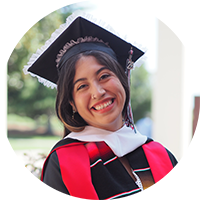
Rocio Escobar
California State University, East Bay graduate

Aethiopia Joseph-Salmon
Howard University graduate
1. What specific teaching and research activities did you undertake during your SPARC Award tenure?
Michelle Catao
Duquesne University
My SPARC award provided the opportunity to engage in a range of meaningful teaching and research activities. On the teaching side, I guest lectured in my mentor’s assessment course, where I taught first-year master’s students about both instrumental and non-instrumental dysphagia assessment methods. I also facilitated two Parkinson’s support groups, providing education on speech and swallowing changes and promoting evidence-based management strategies.
For the research component, I developed a multimodal mastication assessment protocol, implemented the protocol with participants, and analyzed masticatory patterns in individuals with typical chewing and swallowing. I presented findings at several conferences, including the 2025 ASHA Convention, and have submitted a manuscript for publication. Through this project, I strengthened my skills in study design, data collection, data analysis, and research dissemination, which have further prepared me for a career in academic research.
Jannabel Ameen
Florida International University
I observed a gap in AAC acceptance and awareness in South Florida, so I tailored my teaching and research activities to address it. As a result, I conducted a qualitative research study exploring parents’ perspectives on children with complex communication needs who had abandoned their child’s AAC device and was able to disseminate my findings at a state-level conference. After participating in a teaching seminar, I felt equipped to host a community speaker series in October, where I debunked AAC myths to my local community and had healthcare professionals, including speech-language pathologists and occupational therapists, share resources and information about AAC. An AAC user also provided a personal perspective on how AAC has impacted his own life.
Rocio Escobar
California State University, East Bay
During my SPARC Award, I gained hands-on experience in teaching and research focused on bilingual AAC. At the Assistive Technology Industry Association (ATIA) 2025 Conference, I explored current research and clinical practices. One of the most rewarding parts of the experience was delivering caregiver seminars in Spanish and English for families of people who use AAC in the SF Bay Area. I also had the opportunity to collaborate on AAC research projects during a summer research internship at Pennsylvania State University and learn from their wonderful faculty and researchers about different academic career pathways.
Aethiopia Joseph-Salmon
Howard University
I engaged in quite a bit of teaching and research activities. They were as follows: enroll in TA course, create a class lecture, observe and evaluate two lectures, submit a poster or oral presentation on the topic of fibromyalgia and its relationship to disorders of cognition, communication, and swallowing, interview three faculty members at different institutions and a variety of career settings, and meet with two potential PhD advisors with expertise in neurological communication disorders in communication sciences to learn about their labs, grant/funding opportunities.
2. What motivated you to apply for the SPARC Award, and how did you first learn about it?
Michelle Catao
Duquesne University
I first learned about the SPARC Award during a lab meeting when my mentor, Dr. Abigail Delehanty, mentioned the opportunity. As I explored the program further, I was drawn to its structured focus on both teaching and research, which gave me a glimpse into key components of an academic career in speech-language pathology. I have always been interested in dysphagia, and I was especially excited by the ability to tailor my goals to align with my personal interests while directly complementing the experiences I had already gained in the classroom and clinic.
Jannabel Ameen
Florida International University
When I started graduate school, I was determined become a clinician because that was all I had ever known. However, through a graduate assistantship with a professor at Florida International University, I quickly discovered the many opportunities within the field of speech-language pathology. Working alongside Dr. Alliete Alfano cultivated my interest in higher education and research. I realized that a career in academia would allow me to innovate, address gaps in the field, and make a meaningful impact by teaching and mentoring future speech-language pathologists. Although I was unsure where to begin, I learned about the SPARC Award through an NSSLHA newsletter and felt compelled to apply because it aligned perfectly with my growing passion for higher education.
Rocio Escobar
California State University, East Bay
I started supporting a few AAC research projects at my university (shout out CSUEB!) and loved it! I then decided to start my own Master’s thesis with my research mentor, Dr. Elena Dukhovny. This also got me thinking about research careers I might pursue after graduation. I first learned about the SPARC Award from a NSSHLA email, and when I reached out to my mentor, she was really supportive and encouraged me to apply. Her guidance motivated me to take the next step and submit my application.
Aethiopia Joseph-Salmon
Howard University
I was motivated by observation of my communication difficulties, similar concerns of people who share my diagnosis, and the desire to better understand what was occurring. Dr. Valencia Perry made me aware of various awards that were being offered while I was at Howard University, every year. She told me that I should apply!
3. Can you describe the process of selecting your mentor and how their expertise contributed to your SPARC Award experience?
Michelle Catao
Duquesne University
I was fortunate to have a mentor who encouraged me to consider an academic career and introduced the SPARC Award to me. I had already worked with my mentor for two years on three studies before the SPARC award. Although our primary research interests differed, she helped me develop as a researcher by encouraging me to approach my work from a broader perspective and think more creatively, while still supporting my concentration in dysphagia. Her mentorship style balanced guidance with independence, allowing me to learn through experience while still having her expertise to lean on.
Jannabel Ameen
Florida International University
I chose Dr. Alliete Alfano as my mentor because her expertise in qualitative research and her impact through mentorship inspired my interest in higher education. Her guidance and willingness to engage with my “passionate” ideas shaped my SPARC Award experience, giving me the freedom to explore my own initiatives while feeling supported. The award, combined with her mentorship, opened many opportunities: I am now a PhD student with Dr. Alfano as my dissertation chair, teach alongside her as a teaching assistant, and serve as a graduate assistant in the Office of the Dean, where I discovered a new interest in policy. These experiences emerged because someone believed in me and invested in my growth.
Rocio Escobar
California State University, East Bay
When I started graduate school, I knew I wanted to participate in research related to bilingualism or AAC. I reached out to see if there were any projects I could support as I began my Master’s program. While helping my research mentor on a few projects, I discovered how much I enjoyed research and decided to start my own thesis with her guidance. I felt very comfortable collaborating with her and learned so much from her expertise and experience, which made the work feel both exciting and rewarding.
Aethiopia Joseph-Salmon
Howard University
Dr. Alaina Davis taught almost all of my cognitive courses since starting the COSD program at Howard so naturally she felt like a good fit. My project investigated the presence of cognitive-communicative and swallowing deficits in people with fibromyalgia. She is a clinician and researcher in cognitive-communicative areas so she assisted in crafting my projected with that expertise, as well as answering any questions, or correcting my line of thought.
4. What advice would you give to students considering applying for the SPARC Award?
Michelle Catao
Duquesne University
My advice to students considering the SPARC Award is to challenge yourself and take risks when setting your goals. Choose a project that truly excites you, embrace the experience fully, and allow yourself to grow and learn every step of the way. This is your opportunity to explore, experiment, and learn more about your passions and strengths!
Jannabel Ameen
Florida International University
My advice is to apply even if you’re unsure or hesitant, because even if you feel incapable, you’re more than capable. Throughout the process, remain open-minded and don’t be afraid to try new things, even if you began graduate school with a fixed plan. Being open to new experiences can create countless opportunities, and if you’re anything like me, you may discover new strengths, interests, and capabilities. I chose this field to make an impact and initially thought there was only one way to do that through direct clinical work. The SPARC Award, along with mentors who invested in me, completely transformed my career trajectory, showing me that impact can take many forms. I gained new ambitions, goals, and perspectives, and I hope you apply and let this experience shape you.
Rocio Escobar
California State University, East Bay
If you’re on the fence, just apply! I was nervous about whether I’d have enough time, balancing my Master’s program, being a new mom, and starting full-time internships. But the teaching and research activities I chose to pursue turned out to be incredibly valuable for both my thesis project and professional development. They helped me stay on track with multiple small and large goals, and I gained experiences I wouldn’t have had otherwise.
Aethiopia Joseph-Salmon
Howard University
For people who are sure they will be entering academia: It would be smart to do a project on a topic a) you’re deeply passionate about b) that will assist in the “ideas” of your doctoral projects (whether literature, data, etc.) If you do not have a passion yet, that’s okay, however, I think having a focus and some sort of plan is really important as you continue on your doctoral journey.
The SPARC Award can be a powerful first step toward a career in research or academia. Whether you’re already considering a PhD or simply curious about academic pathways, these student experiences show how the program can help you build skills, explore your interests, and connect with mentors who support your goals. If you’re interested in research or teaching, the SPARC Award may be the opportunity that helps shape your next steps.